Key to remember:
Employee didn’t provide proper leave notice — Lost his temper and his argument in court
05/27/2026
Court sided with the employer
One Sunday in September 2022, Jason, an employee, wasn’t feeling well. He didn’t let Nunu, his supervisor, or anyone else at work know on Sunday that he wouldn't be working the next day. Jason also didn’t let anyone at work know first thing on Monday morning. That morning, a coworker texted Jason about a work task. Jason told the coworker he didn’t feel up to the task.
The coworker advised Jason to tell Nunu. Instead, Jason went back to sleep. After 11:30 a.m., Jason texted the coworker that he would call out sick, and he would let Nunu know. Nunu said Jason could take the day off and take care of himself.
After Jason returned to work the next day, Nunu called him to discuss his failure to give advance notice of his absence the previous day. During the call, Jason was emotional and defensive. He also raised his voice at Nunu, who, in turn, called Jason out on his behavior. She also talked to HR about it. HR and Nunu decided to fire Jason.
The next morning, they told Jason he was fired for a number of reasons, including that he was late and missed work.
Jason sued, asserting that the employer fired him because he failed to show up for work after calling in sick, in violation of the District of Columbia (DC) Accrued Sick and Safe Leave Act (Sick Leave Act).
The DC Sick Leave Act requires employees to notify their employer of unforeseeable leave before the start of the work shift. In emergencies, employees have to provide notice before the start of the next work shift or within 24 hours of the emergency, whichever comes first.
In this case, the company policy required employees who are unable to work due to illness or injury to contact their supervisor as soon as possible and no later than 2 hours after their normal starting time.
In court, the employer argued that, rather than timely reporting his sick leave, Jason simply didn’t show up in the morning and waited until near midday to tell his supervisor that he wouldn’t be coming in, even though he knew beforehand that he was going to miss work and told a coworker about it. He, therefore, didn’t have protections under the DC law. The employer also pointed to Jason’s unprofessional behavior as a reason for firing him.
The court ruled in favor of the employer, saying that Jason didn’t comply with the DC Sick Leave Act or the employer’s policy when he requested to take sick leave. Accordingly, his conduct wasn’t protected.
Employers can learn from court decisions, and this one shows how employers can require employees to call in on time if they’re going to miss work under a state leave law.
This article was written by Darlene M. Clabault, SHRM-CP, PHR, CLMS, of J. J. Keller & Associates, Inc. The content of these news items, in whole or in part, MAY NOT be copied into any other uses without consulting the originator of the content.
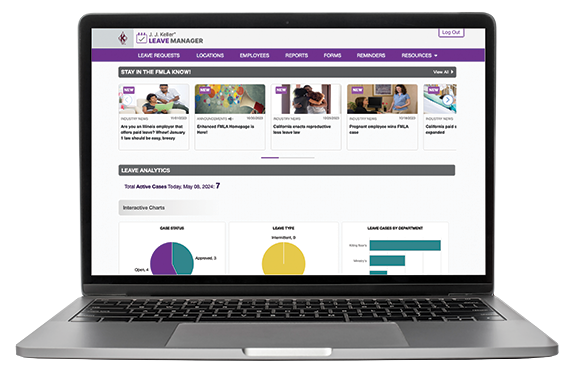
The J. J. Keller LEAVE MANAGER service is your business resource for tracking employee leave and ensuring compliance with the latest Federal and State FMLA and leave requirements.