Key to remember:
Court: Employer failed to give an FMLA certification due date
02/25/2026
Case allowed to proceed
While employers may ask that employees give them a certification supporting leave under the federal Family and Medical Leave Act (FMLA), it helps to have a specific due date. Also, simply asking for FMLA leave gives employees protection. One employer learned this recently.
The case
Susan worked at one location before she was promoted on May 1 and transferred to a different location. She worked at the new location for fewer than 10 days when she stopped coming to work. Instead, she provided a series of doctor’s notes and one work release for multiple, consecutive periods of time off well into mid-June.
On May 23, Susan asked HR for FMLA paperwork, which she received via email the same day. The paperwork indicated in general terms that Susan had at least 15 calendar days to get a certification, but didn’t specify a certain deadline.
On June 6, Susan told the employer that she had been diagnosed with a blood disorder and that she planned to return on June 16. She also said her current pulmonologist didn’t routinely complete FMLA certifications. HR responded that the company couldn’t hold her position unless she returned to work or provided a certification.
Susan didn’t return to work on June 16, nor did she submit a certification on or before that date. On June 15, she was still extremely sick and emailed her employer that she would need to remain on leave until June 22, when she would see a new pulmonologist who would complete her FMLA certification.
On June 16, however, the employer fired Susan because she hadn’t provided an FMLA certification.
The claim and opinion
Susan sued, claiming that the employer fired her because she asked for FMLA leave.
While the court agreed with the employer that Susan didn’t provide a certification, it held that simply asking for FMLA paperwork was enough to invoke her FMLA protections. The employer tried to argue that Susan didn’t have FMLA protections. It claimed that she never took FMLA leave because she didn’t return the certification so they could designate her leave as FMLA-qualifying.
The court said that it didn’t matter that Susan didn’t obtain the FMLA certification in time, since the employer never gave her a due date for it. She told her employer that she wanted to take FMLA leave and requested the necessary paperwork. That was enough to give her FMLA protections.
It didn’t help that the employer fired Susan right after she asked for more time off. It appeared that the employer fired Susan because she asked for FMLA leave, allowing the FMLA retaliation claim to proceed.
Gossett v. Jiudicy Inc. D/B/A Labor Finders, Middle District of Georgia, No. 7:24-CV-00067, February 5, 2026.
While employers may ask for an FMLA certification, they should give the employee a true deadline. If an employee asks for more leave, even before giving a certification, employers should pause before firing the employee.
This article was written by Darlene M. Clabault, SHRM-CP, PHR, CLMS, of J. J. Keller & Associates, Inc. The content of these news items, in whole or in part, MAY NOT be copied into any other uses without consulting the originator of the content.
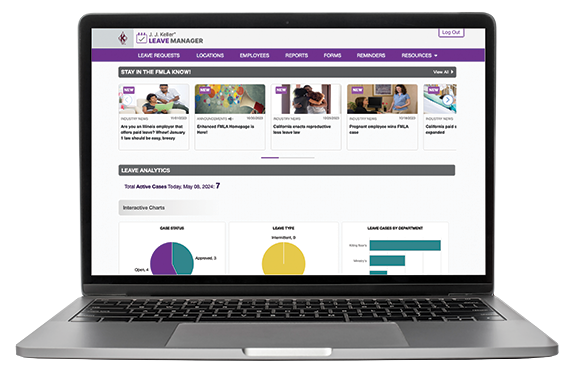
The J. J. Keller LEAVE MANAGER service is your business resource for tracking employee leave and ensuring compliance with the latest Federal and State FMLA and leave requirements.